Restorative Dentistry
Same-Day Crowns vs. Traditional Crowns: What's the Difference?
A cracked molar, a broken cusp, a filling too big to trust — when your dentist says you need a crown, the next question is usually how many appointments it will take. At Colorado Dental Spa, our team offers both paths: classic lab-made crowns and same-day crowns designed, milled, and placed in a single visit. Patients from Golden, Lakewood, Arvada, Wheat Ridge, and Applewood choose us specifically to skip the temporary and the second trip.
But faster is not automatically better for every tooth, and traditional crowns still have their place. This guide compares the two honestly: how each is made, how many visits each needs, what temporaries involve, what the materials are, and who is a candidate for each. When you are ready, call our Golden, CO office at (303) 232-3636 — most same-day cases start with a brief exam on a day that suits you, as early as 7:00 AM.
How a traditional lab crown works
Traditional crowns have restored teeth reliably for decades, and the process is well refined. At the first visit, your dentist numbs the tooth, shapes it to make room for the crown, and takes a putty or digital impression. A temporary crown — usually acrylic — is fitted over the prepared tooth, and the impression goes to an outside dental lab. Two to three weeks later you return, the temporary comes off, and the permanent crown is tried in, adjusted, and bonded.
The strengths of this path are range and familiarity. Outside labs offer a wide menu of materials, including porcelain-fused-to-metal and layered ceramics for tricky front-tooth shading, and they handle complex bite reconstructions every day. The trade-off is time and the in-between: you wear a temporary, you watch what you chew, and you book a second visit. For straightforward teeth that is merely inconvenient. For busy schedules it can mean weeks of babying a tooth.
How our in-office same-day process works
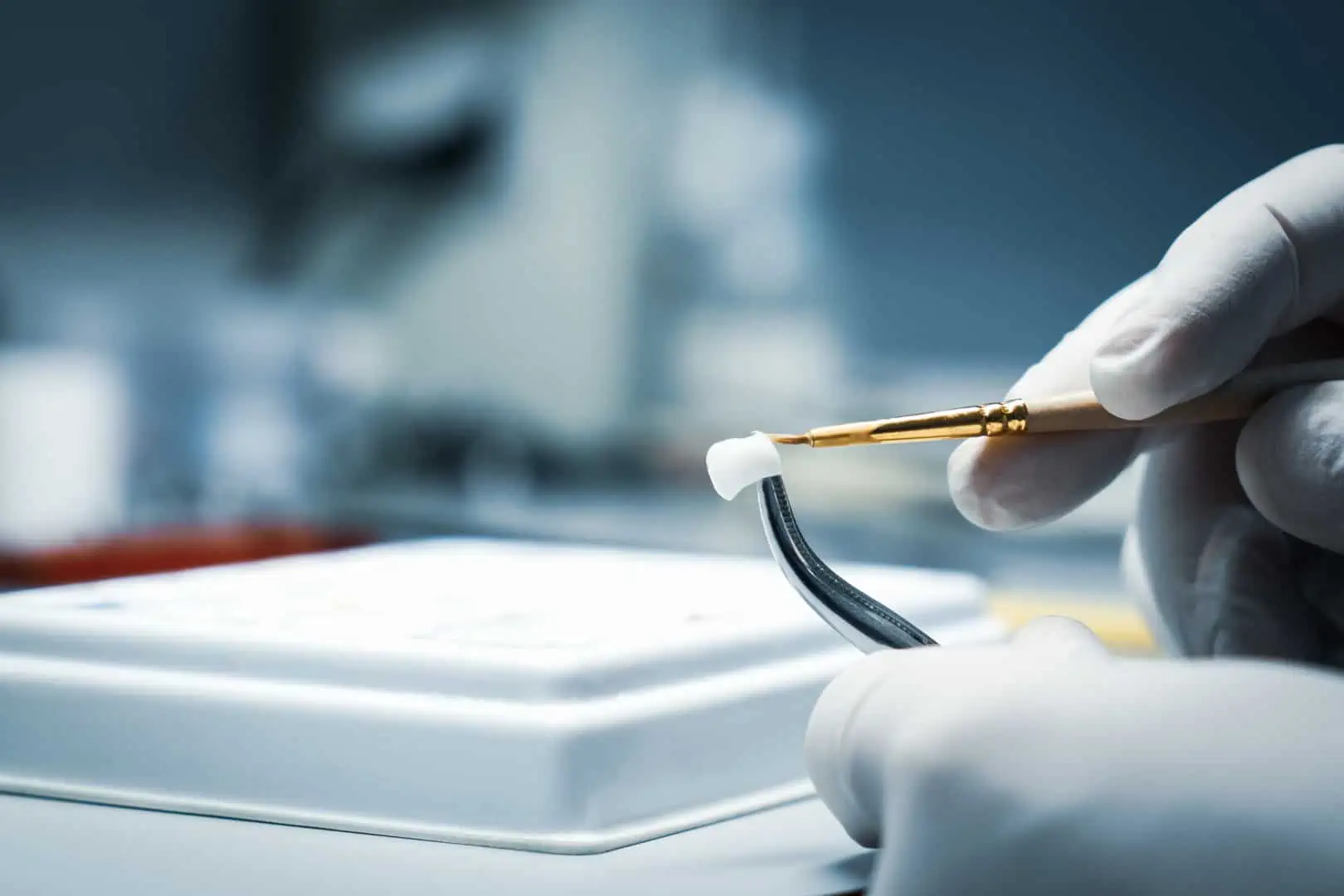
Same-day crowns compress all of that into about one to two hours. After numbing and shaping the tooth — the same careful preparation either path requires — we capture a 3D digital scan instead of a goopy impression tray. You watch your tooth appear on screen while we design the crown around it: shaping the cusps, contouring the sides, and setting the bite against the opposing tooth.
Then the design goes to our in-office mill, which carves your crown from a solid block of high-strength ceramic in roughly 15 to 20 minutes. We try it in, check the color and contacts, polish and stain it to blend with your smile, and bond it permanently — all before you leave. No temporary, no lab transit, no second shot of anesthetic two weeks later. The technology behind this is part of our broader digital dentistry approach, and you can read the step-by-step on our same-day crowns page.
Visits and temporaries: the practical difference
Count the real cost in calendar time, not just chair time. A traditional crown means two appointments plus the days between them — time off work or school twice, twice the numb lip, and a temporary crown in between that can feel bulky, trap food, or pop off on caramel. Most temporaries survive fine with care, but every dentist has a story of a patient calling on a weekend because one came loose.
A same-day crown means one appointment and a permanent tooth the same afternoon. You eat dinner on it that night. For parents juggling school pickups, professionals who cannot take two mornings off, and anyone with dental anxiety who wants fewer visits full stop, that single-visit difference is the whole decision. If your schedule has only room for one visit, say so when you call — we reserve same-day blocks specifically for that.
Materials: ceramic now vs. the full lab menu
Same-day crowns are milled from a single block of ceramic — strong, biocompatible, tooth-colored through and through, with no metal underneath and no dark line at the gum. For the large majority of back teeth and many front teeth, that monolithic ceramic handles normal chewing forces comparably to lab-made options and blends beautifully with natural enamel.
Traditional lab crowns still offer the widest material menu. Layered porcelain built up by a ceramist can match subtle front-tooth translucency shade by shade, and porcelain-fused-to-metal remains a workhorse where strength must pair with an established bite scheme. Gold crowns, though rarely requested for visible teeth, last remarkably long on second molars. In practice, most patients never need the exotic end of that menu — but when a front tooth demands perfect artistry or a worn bite needs a full-mouth scheme, we will tell you the lab path serves you better.
Candidacy: who fits which path?
You may be a good candidate for a same-day crown if you have a tooth that is cracked, broken, or weakened by decay or a large filling and needs full coverage — front teeth and back molars alike. That covers most crown situations we see: a cracked premolar after biting something hard, a molar with a failing silver filling, a tooth that just finished root canal therapy and needs protection.
Traditional lab crowns may fit better when biting forces are extreme — heavy nighttime grinding with visible wear across many teeth — or when several front teeth need shade-matched work as a set, where a ceramist layers porcelain across units. Very subgingival margins that are hard to scan, or cases needing a post-and-core buildup with complex angulation, can also favor the lab. During a brief exam we evaluate the tooth, your bite, and your habits, then recommend plainly. When less than full coverage will do, an onlay or inlay that preserves more natural tooth may beat either crown option.
Cost, insurance, and longevity
Patients often assume same-day means pricier. In our office the fees are comparable: you trade lab bills for milling time and design expertise, and most dental plans cover same-day crowns exactly like traditional crowns because both are restorative procedures with the same codes. We verify your benefits before treatment and put the estimate in writing either way.
Longevity depends far more on habits than on which path made the crown. Either crown can serve for many years with daily brushing and flossing, regular checkups, and a night guard if you grind. What shortens any crown's life is familiar: skipping cleanings, chewing ice, using teeth as tools, or letting gum disease loosen the foundation. We will be blunt about your risk factors at the exam — a crown protects a tooth, it does not make it indestructible.
Which should you choose?
Choose same-day when you want one visit, no temporary, and a tooth-colored ceramic result without the wait — which describes most single crowns on cracked or decayed teeth. Choose the traditional lab path when your case needs its special strengths: multi-tooth front smile work, severe wear requiring a staged bite plan, or a material only the lab offers. Either way you get the same careful preparation, the same bonded seal, and the same bite check before you leave.
Our promise is that the recommendation comes from your mouth, not our schedule. If same-day fits, we will show you why. If the lab serves you better, we will say that too — and handle the temporaries and follow-up with the same care. Call (303) 232-3636 to schedule a crown evaluation. Patients come to us from across the west Denver metro to leave with a finished tooth in one appointment, and new patients are always welcome.